The Colombia Arc: Medellín, Bogotá, Cartagena and Three World-Class Festivals
Colombia runs three festivals that would anchor a trip on their own: EDC Colombia in Medellín, Rock al Parque in Bogotá (the largest free rock festival in Latin America), and the Cartagena Music Festival on the Caribbean coast. String them together and you get 14 days through three completely different Colombian cities, each worth the visit without the festivals, each transformed by them.
The route
What does this trip actually cost?
| Flying from | Flights | Typical / person | Budget to premium |
|---|---|---|---|
| Miami / Fort Lauderdale | $350 | $1,800 | $1,200 to $3,000 |
| New York | $500 | $2,000 | $1,400 to $3,200 |
| Los Angeles | $650 | $2,200 | $1,600 to $3,500 |
| London | $700 | $2,400 | $1,700 to $3,800 |
| Toronto | $550 | $2,100 | $1,500 to $3,300 |
Per person, 14 nights across three cities. Colombia is an excellent value destination — mid-range hotels run $50–90/night, restaurant meals average $8–20, and internal flights between cities cost $50–80 each. Festival passes: EDC Colombia $150–250, Rock al Parque is free. The Cartagena Music Festival has ticketed evening concerts at $30–80. All-in this arc is among the best value of any multi-festival trip in the world.
Colombia is one of those countries that rewards actually going rather than reading about it. The reputation has lagged reality by a decade — Medellín's transformation from the world's most dangerous city to a global design and innovation hub is the most dramatic urban story of the 21st century, and the city is genuinely extraordinary to visit. Bogotá at 2,600 metres is a colder, grittier, more intellectually intense city with the best food scene in South America after Lima. Cartagena's walled colonial city on the Caribbean coast is a different country entirely from either. Three cities, 14 days, zero repeated experiences.
Medellín: days 1 to 5
Fly direct from Miami or Fort Lauderdale to José María Córdova Airport (MDE) — Spirit, Avianca, and American operate direct routes. The airport is in Rionegro, 45 minutes from the city by taxi or the aerobus.
Stay in El Poblado for a first visit — the safest, most visitor-friendly neighbourhood, built around Parque El Poblado and the Zona Rosa nightlife strip. Laureles is the more local alternative — less tourist infrastructure but better neighbourhood feel and lower prices.
Day 1–2: the city. Medellín sits in a narrow valley at 1,500 metres with the Andes rising on both sides. The Metro de Medellín — the only metro in Colombia — is the city's urban spine and a genuine point of civic pride. Take it. The Metrocable aerial gondola lines connect the hilltop comunas that once defined the city's darkest years to the metro network below. Take Line K from Acevedo station to Parque Arví for the single best view of the valley and a complete picture of how the city works.
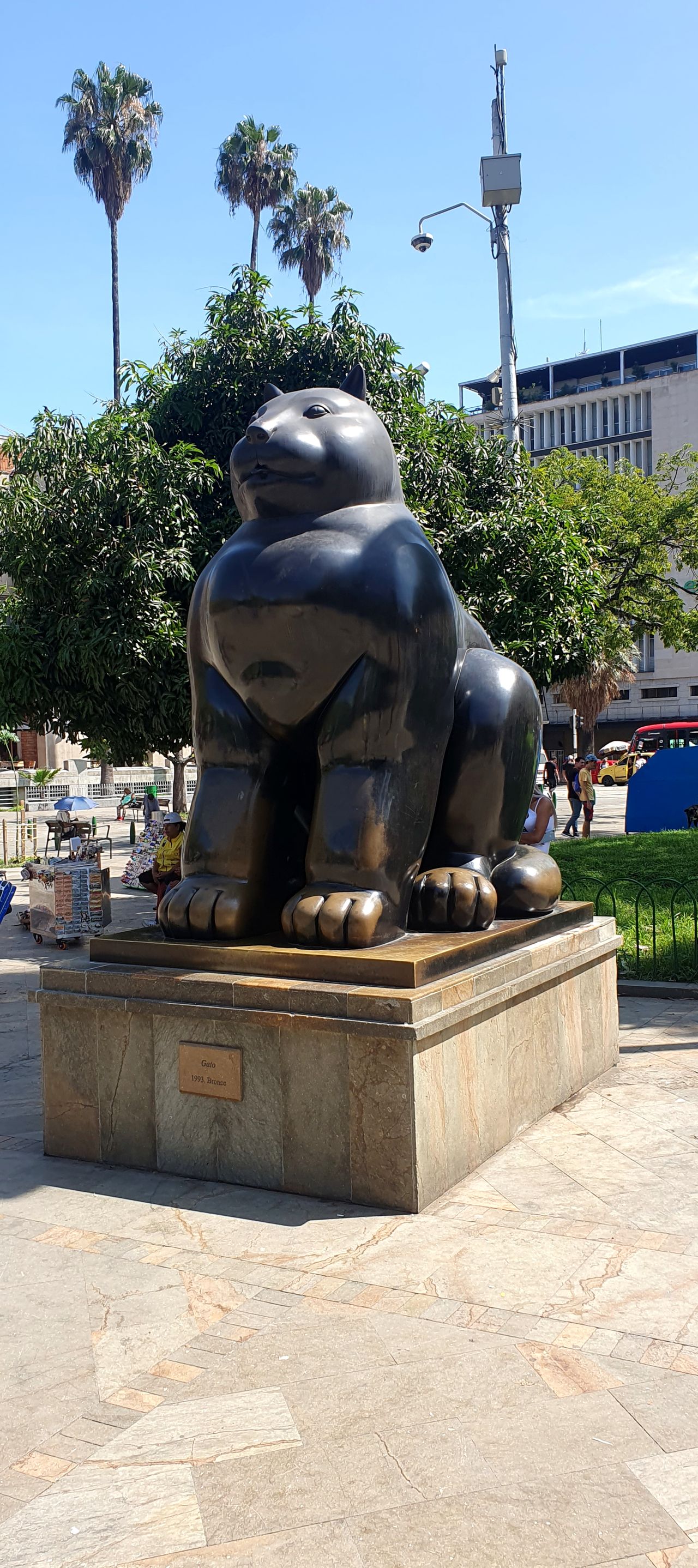
Plaza Botero and the city centre. Fernando Botero's monumental bronze sculptures — famously voluminous figures of men, women, animals, and everyday objects — fill the plaza around the Museo de Antioquia. The museum itself has the largest collection of Botero's work in the world. The surrounding streets of Centro are dense, loud, and full of street food: the chorizo, empanadas, and arepas from the food carts around San Antonio station are as good as anywhere in the city.
El Peñol and Guatapé: day trip. 1.5 hours from Medellín, La Piedra del Peñol is a 220-metre monolithic rock you can climb via 740 steps carved into a crack in the face — the view from the top over the reservoir system is one of the great sights in Colombia. Guatapé village below has the most colourful painted facades in South America. Take the morning bus from the northern terminal, spend 4 hours, return by afternoon.
EDC Colombia. EDC Colombia is typically held in late January or February at La Macarena exhibition park in the city centre. The production follows the Las Vegas format — multiple stages, carnival rides, live performers — scaled for a 40,000–60,000 person crowd. The crowd is overwhelmingly Colombian and the energy is different from the US event in the best way. Tickets sell out; book as soon as they go on sale. The festival runs Friday and Saturday nights until dawn.
Bogotá: days 6 to 9
Fly from Medellín's Olaya Herrera Airport (EOH) — the city airport, not José María Córdova — to El Dorado (BOG) in 45 minutes. Avianca and LATAM operate frequent daily flights for $50–80.
Bogotá sits on the Sabana de Bogotá, a high-altitude plateau at 2,600 metres. It is cold — average 14°C year-round, colder at night — and takes a day to adjust to after Medellín's spring-like warmth. Stay in La Candelaria (the colonial historic district) or Chapinero (the lively neighbourhood with the best restaurants and bars).
La Candelaria. The historic centre is dense with churches, plazas, and the two best museums in South America. The Museo del Oro (Gold Museum) holds 55,000 pre-Columbian gold pieces — the largest collection in the world — including the legendary Muisca raft that inspired the El Dorado myth. The Botero Museum (separate from the Medellín one) is free, with works by Botero alongside Picasso, Dalí, and Monet donated by the artist to the city. The Plaza de Bolívar is the historic heart — the Congress, the Supreme Court, the Cathedral, and City Hall all face the same square.
The food. Bogotá has the most serious restaurant scene in Colombia and one of the top five in Latin America. Andrés Carne de Res in Chía (40 minutes north) is a Colombian institution — a three-floor restaurant, bar, and event space that seats 2,000 people and runs until 3am every weekend. Worth the trip north. In the city, Usaquén neighbourhood has the best brunch options and a Sunday market. La Macarena neighbourhood (a different one from Medellín) has the best coffee shops and lunch spots.
Rock al Parque. Colombia's biggest free music festival takes place in Parque Simón Bolívar — a 400-acre urban park in northern Bogotá — over three days, typically in early December. The lineup runs heavy metal, punk, rock, and Latin alternative across multiple stages. Entry is completely free. Attendance regularly reaches 350,000 people over the three days. If your arc aligns with the dates, this is one of the great free festival experiences in the world.
Cartagena: days 10 to 13
Fly from Bogotá to Rafael Núñez Airport (CTG) in Cartagena — 1 hour. The airport sits just outside the walled city; the historic centre is a 10-minute taxi ride.
Cartagena's Ciudad Amurallada — the walled colonial city — is a UNESCO World Heritage Site and one of the best-preserved Spanish colonial cities in the Americas. The walls, built by Spain between the 16th and 18th centuries to protect the city from pirates and European rivals, still form an unbroken ring around the old city. Walk the top of the walls at sunset. The labyrinth of pastel-painted streets, bougainvillea, and balconied houses inside is one of the most photogenic urban environments in the world.
Getsemaní. The neighbourhood immediately outside the old city walls was historically working-class and avoided by tourists. It has transformed into Cartagena's most interesting creative neighbourhood — street art, good bars, the best local restaurants, and a completely different energy from the touristified old city. The Plaza de la Trinidad is the evening gathering point. Eat dinner in Getsemaní, not inside the walls.
The islands. The Islas del Rosario — a coral archipelago 45 minutes by speedboat from Cartagena — have clear Caribbean water, coral reefs, and day-use beach clubs. Most hotels organise group day trips. Go once. The Playa Blanca on Isla Barú is the nearest white sand beach — accessible by boat or by car and motorbike across the mainland. Better for a half day than a full day.
The Cartagena Music Festival (Festival Internacional de Música de Cartagena) takes place in January, using the old city's plazas, churches, and colonial courtyards as venues. Chamber music, classical performances, and jazz concerts fill the evenings across venues that exist nowhere else in the world. Some concerts are free in the plazas; evening performances at heritage venues are ticketed at $30–80. It is one of the most atmospheric music events in South America.
Group trip logistics
- Fly Miami–Medellín direct. Spirit operates year-round from Fort Lauderdale. American via El Dorado is the other option. Book Medellín as your entry and Cartagena as your exit — flying out of Cartagena back to Miami is easy on direct Spirit and American routes.
- Internal flights. MDE–BOG and BOG–CTG are both under $80 booked in advance on Avianca, LATAM, or Wingo. Book when you book the international flight — prices rise as dates approach.
- Currency. Colombian pesos. ATMs are widely available in all three cities. Avoid exchange booths at airports — the rate is poor. Use an ATM at the Medellín arrivals hall immediately after landing.
- Transport in Medellín. The Metro and Metrocable are genuinely excellent. Use the Mi Civica card (available at any Metro station). Uber operates in Colombia legally as a taxi alternative. Avoid unmarked taxis — always use Uber, InDriver, or a hotel-arranged car.
- Cartagena heat. Cartagena sits at sea level and averages 30°C year-round with high humidity. This is a different climate from Medellín and Bogotá. Pack accordingly — linen, light cotton, and lots of water.
- Altitude in Bogotá. The first day at 2,600 metres can bring headaches, fatigue, or shortness of breath. Don't plan a heavy day on day 1 in Bogotá. Drink water, avoid alcohol, and let your body adjust.
How to extend the arc
The Coffee Region (Eje Cafetero). The Zona Cafetera — centred on Salento, the Cocora Valley, and the coffee farms of the Quindío department — is 3 hours from Medellín and 5 hours from Bogotá. Colombia's coffee country is one of the most beautiful landscapes in South America: cloud forest, wax palm valleys, colonial coffee towns, and farm tours with the best coffee you will ever drink. Add 3 nights between Medellín and Bogotá to go through it.
Tayrona National Park. 2.5 hours by bus east of Cartagena along the Caribbean coast, Tayrona is Colombia's most visited national park — jungle-covered mountains descending directly into the sea, with some of the best beaches in South America accessible only by foot or horse. Add 2 nights at the end of the Cartagena leg before flying home.
When to go
Peak arc timing. Medellín in its best weather, Cartagena Music Festival also January.
Bogotá's biggest free festival. Fly in late November, hit Rock al Parque first, then arc south to Cartagena.
Feria de las Flores — silleteros parade with flower arrangements on their backs. The city's own festival.
Between festivals but excellent value. Cartagena's rainy season begins but the walled city stays beautiful.
Bogotá's free jazz festival in Parque Nacional. Another excellent anchor for an October–November Colombia trip.